BCSC wilderness expedition
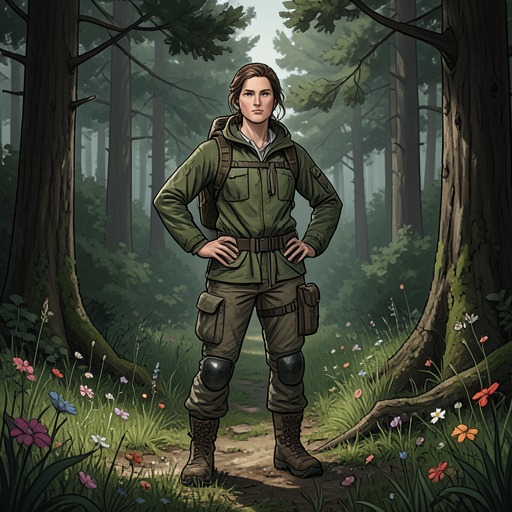
Happiness for BeginnersThe BCSC wilderness expedition is a three-week course in which survival skills are learned in the field and tested under mounting pressure. For Helen, its decisive significance is not simply that she endures the Absarokas: the trip makes her practical abilities visible to others and, eventually, to herself. Along the way, a serious accident forces her to act before she feels ready, a navigation challenge turns her map-reading into leadership, and a final disclosure from Jake changes what she understands about his presence on the expedition.
Arrival and Learning by Doing
At check-in, Jake keeps an anonymous distance behind Helen, and at the afternoon orientation he sits at the front while she takes a seat near the back. Their deliberate separation leaves Helen to face a different discomfort: the other participants appear to be college students, and their shared age, clothes, and manner make her feel out of place. The expedition begins with her uncertain not only of her place in the group but of whether she has the education the course requires.
The instruction is explicitly experiential. When Helen worries that she might need information before she can acquire it through practice, she is told that participants will learn as they go and figure things out. That principle becomes the trip’s working method: skills introduced in classes are carried into situations where the group has to use them, and confidence follows practice rather than preceding it.
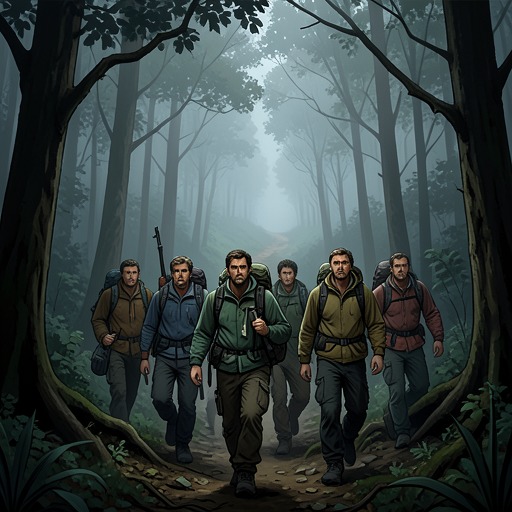
As the first week wears on, the group adjusts to heavy packs, dehydrated food, altitude, and icy river crossings. Participants see a moose across a valley and attend evening lessons on constellations, map-reading, and distinguishing black-bear tracks from grizzly tracks. Their first pass, U-Turn, takes its name from hikers who see the terrain ahead and turn back. This group keeps moving; Helen describes them as building momentum and becoming invested in the work.
Beckett lends Helen the official BCSC handbook after she realizes she did not bring a book. She reads it cover to cover, repeats the reading, and takes notes on the BCSC Certificates. The handbook says that recognition does not necessarily go to the toughest or fastest students, but to those who try hardest. Helen finds that standard reassuring because effort is something she believes she can provide even when she doubts her ability to succeed.
A Group Takes Shape
The group’s shared life quickly acquires its own vocabulary. Windy, admired by the men, becomes Heartbreaker, and the men turn their attention to her into a running points game. Other nicknames attach themselves to recognizable habits: the Sisters become Uno and Dosie, the group’s best cook becomes Cookie, and Mason, who hikes too fast for the others, becomes Flash. Even quiet Hugh, who speaks only to Helen, is dubbed Huey Lewis.
Helen receives no comparable recognition. People call her Helen or sometimes get her name wrong and call her Ellen. In a group where a nickname signals that others have noticed and identified a person, her exclusion makes her feel unseen; she imagines that even if a hawk carried her away, nobody would notice. The group’s growing familiarity therefore has an uneven edge: its playful naming helps create belonging, but Helen initially experiences the absence of a name as evidence that she does not belong.
Hugh’s Accident and the Return Route
The expedition’s practical lessons become urgent when Hugh falls while crossing rotten logs. A log crumbles under his foot, pitching him onto another log; he screams, collapses in an upside-down V, and is pinned by his pack. Helen removes her own pack and tries to recall the first-aid class, but freezes over the question of what to do first. The others are shocked and still. She recognizes that somebody must take charge and begins trying to remove Hugh’s pack, only for him to wake screaming at her not to touch him.
The incident does not leave Helen with an easy sense of competence. She knows that moving someone with a head injury may be dangerous, but cannot immediately tell how to apply that rule when the injury might involve a leg. Her first-aid training gives her a framework, not automatic certainty; the emergency exposes both what she has learned and how frightening it is to act without knowing whether a decision is right.
Later, as Helen goes for help, she realizes that the trail does not match the route she remembers from the map. She compares the terrain with the map’s three-dimensional contours and sees that the group has been angling down a ravine when it should have been on level ground. The trail markers are sparse and difficult to notice, and the group has been travelling the wrong way for some time. In the return effort, the threat to Hugh gives Helen’s pace a new urgency, while the danger of the wrong route makes navigation a matter of immediate consequence rather than classroom knowledge.
Beckett organizes the evacuation by dividing the group and having participants empty three packs with external aluminum frames. He redistributes their belongings and dismantles the frames to make a litter for Hugh. The episode turns the expedition’s cooperative structure into a concrete rescue operation: people, equipment, and training have to be rearranged around the injured participant’s needs.
On the following hike, Helen uses the Three Good Things practice to look back on a day she otherwise remembers for panic and frustration. She identifies three specific gains: she used her limited first-aid training to help Hugh, applied her three-dimensional map-reading skills in the field, and reached a landmark understanding of her relationship with her brother and of her life more broadly. She does not deny the day’s fear or the wrong turn; instead, she recognizes that solving the trail problem felt good even amid the distress.
The Solos and a Difficult Partnership
At the start of the expedition’s third and final week, Beckett announces the culminating test: The Solos. Participants will leave in three groups and spend twenty-four hours surviving on their own. Each person is asked to list four people they would most like to have in a group. Helen would like to hike with Windy, but expects that Windy and Jake will choose each other. To avoid spending the final days preoccupied with their uncertain relationship, Helen decides she needs distance from both of them.
Beckett nevertheless assigns Jake to Helen’s group. His reasons connect their complementary strengths and weaknesses: Jake is the group’s medic, Helen is accident-prone and headstrong, and she is the strongest map reader while Jake is nearly blind. He also believes Jake can supply the confidence Helen struggles to find in herself. Helen understands that she has been given Jake as a partner and that gratitude is expected, even though the assignment puts her in the company she had hoped to avoid.
When the groups set out, the test carries the real risks of wilderness travel: getting lost, running out of water, encountering a bear, being caught by an avalanche, or suffering an accident. On Helen’s route, Mason cannot orient his map correctly. Helen takes out her compass, identifies north, and rotates the map until its north arrow matches the compass. The solution is simple, but the moment sharply exposes the difference between possessing a map and knowing how to use it.
The expedition also becomes the setting for Jake’s disclosure. He tells Helen that he cancelled and then rejoined the trip because he was having trouble with his eyes. After examinations and tests, he learned that he has an inherited vision disorder that cannot be fixed; night blindness is one part of it. The revelation reframes the earlier fact that he is nearly blind and makes the expedition’s assignment of him with Helen more complicated than a straightforward pairing of medic and map reader.
Leadership, Departure, and Recognition
On a later return hike, Dosie and Jake name Helen the leader, and Flash accepts the arrangement. Helen guides the group back confidently, using her map-reading ability to keep them on the trail and together. The only substantial difficulty comes at the beginning, when everyone must cross a rickety bridge. It is especially difficult for Jake, wearing duct-taped glasses, but the group makes it safely across and reaches camp before the others. Beckett praises Helen as the person who had been paying attention, and she responds with finger guns, embracing the nickname Calamity Jane that has come to mark her place in the group.
The expedition ends with a ritualized farewell to the wilderness. On the last morning, the participants make coffee, pack, strike camp, and observe a full minute of silence at sunrise. Beckett leads a farewell prayer that acknowledges human damage to the earth and calls for greater gratitude. At the beginning of the trip Helen would have regarded his solemnity with skepticism; now she joins the group in applauding him. Her response marks a change in how she participates in the group’s rituals, not just in how well she performs wilderness tasks.
Jake lingers at the clearing, taking in the sunrise and turning back for one more look as the others leave. Within an hour, the group reaches the final trailhead, where the old green-and-white BCSC bus waits. After three weeks of walking, the return journey at forty miles an hour feels thrilling and alarming. On the hour-long ride to the lodge, participants discuss their nominations for BCSC Certificates of Merit. Beckett explains that the three honorees are selected by secret ballot for effort, attentiveness, and the way they improved the trip through their presence. The expedition thus closes by returning its participants to ordinary transport while carrying forward a new form of recognition: the group has learned to see one another through what they did on the trail.